How to Feel Financially Ready to Buy a Home — Even if Your Budget Isn’t Perfect
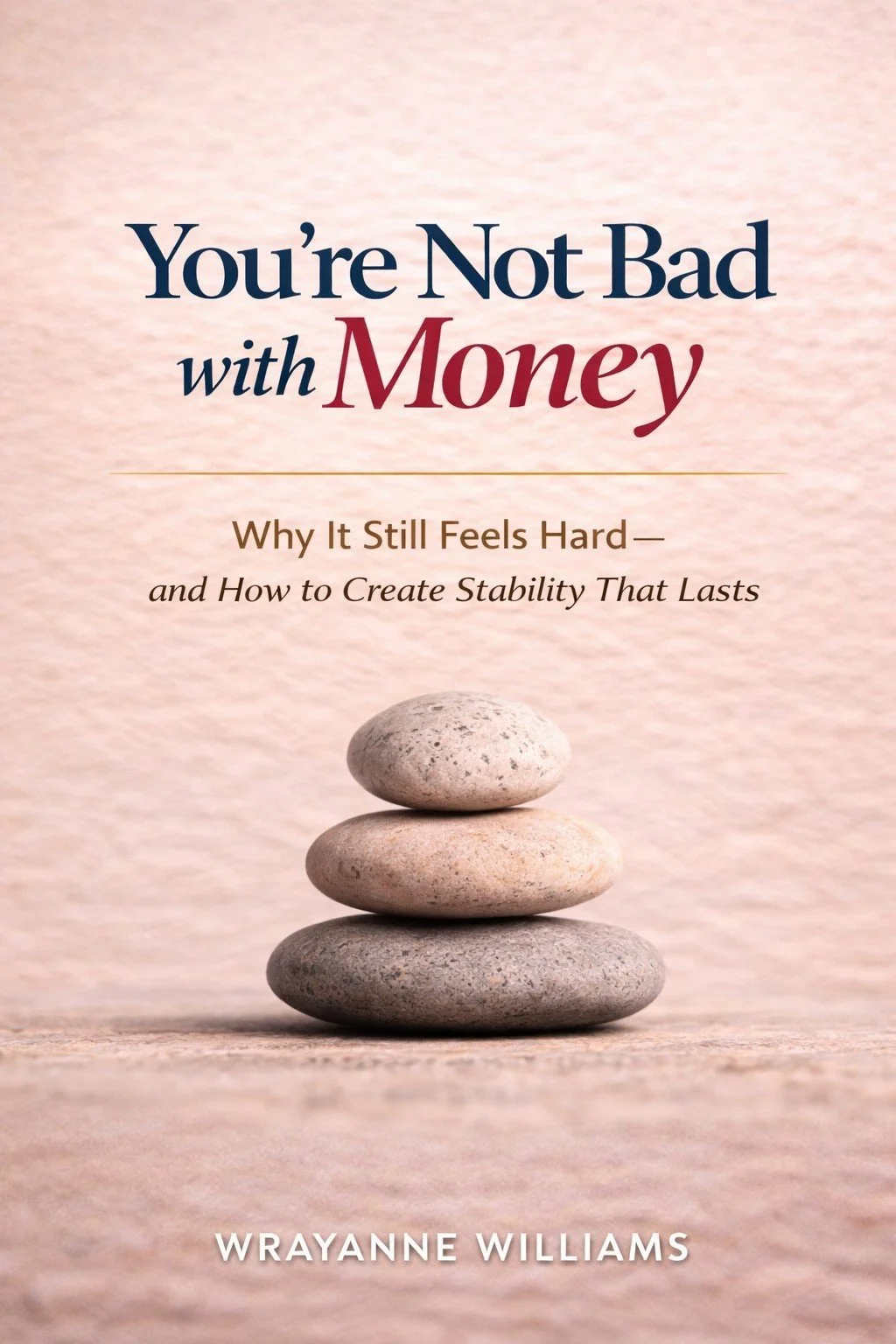
Book cover of You’re Not Bad with Money by Wrayanne Williams, focused on financial stability and confidence when making major financial decisions
If you’ve been thinking about buying a home but keep wondering whether you’re really financially ready, you’re not alone.
One of the biggest misconceptions I see is this idea that you need to have everything perfectly figured out before you can move forward. A perfect budget. Perfect savings. Perfect timing. Perfect confidence.
Real life rarely works that way.
After more than two decades in mortgage lending and helping thousands of families through the home financing process, I’ve seen this over and over: most people are not bad with money. They’re just trying to make big decisions without a structure that helps them feel stable.
That realization is actually what led me to write my book, You’re Not Bad with Money.
Financial readiness is not the same thing as financial perfection
A lot of buyers assume being “ready” means:
having zero debt
having a huge savings account
never feeling nervous
knowing exactly what the market will do next
Many also believe they must save 10–20% down before even considering buying a home.
That’s not reality for most people.
Today, there are a variety of loan options that allow qualified buyers to purchase with relatively low down payments, and in some cases, down payment assistance programs or seller concessions can significantly reduce upfront cash requirements.
Financial readiness usually looks more like this:
you understand your income and expenses
you have some reserves beyond just the minimum needed to close
you have a plan for handling the monthly payment comfortably
you’re making decisions from clarity, not panic
That’s a very different standard than perfection.
And honestly, it’s a much healthier one.
The framework I believe in: Protect, Regulate, Grow
In my book, I share a simple framework that helps people create more financial stability: Protect. Regulate. Grow.
It applies beautifully to preparing for homeownership too.
1. Protect
Before making a major financial move, it helps to have a cushion.
That doesn’t necessarily mean you need a large down payment saved. Many buyers today are able to purchase using low down payment loan programs, and some may qualify for assistance that helps cover a portion of the upfront costs.
However, it does mean thinking beyond just the minimum needed to close. Homeownership comes with real-life surprises — maintenance, repairs, moving costs, life changes — and having some level of reserves can make a meaningful difference in how secure you feel after move-in day.
Financial stability is not defined by how much cash you bring to closing. It’s defined by whether your overall financial picture supports the payment comfortably.
2. Regulate
This is where structure matters most.
When your money has a system, everything feels less overwhelming. Understanding where your income goes each month, planning for fixed expenses, and creating a realistic rhythm for spending and saving can help you feel far more confident stepping into a mortgage payment.
Many buyers feel surprised by how manageable the process feels once they have clarity around their numbers.
3. Grow
Once you’ve created stability, you’re in a much better position to build.
Homeownership can absolutely be part of a long-term wealth-building strategy, but it works best when it’s built on a strong foundation — not stress and guesswork.
The goal is not just getting into a home. The goal is feeling secure while you’re there.
What if I don’t have a large down payment saved?
One of the most common questions I hear is whether someone should wait to buy until they have saved a large down payment.
In many cases, that simply isn’t necessary.
Depending on qualifications, some buyers are able to purchase with relatively low down payments, and in certain situations, down payment assistance or seller-paid closing costs can help reduce the amount of cash needed upfront.
This means some buyers are able to move forward with minimal out-of-pocket funds beyond earnest money and option fees required once a contract is accepted.
Every situation is different, but the important takeaway is this:
A large down payment is not always the determining factor in readiness.
Cash flow, credit profile, overall financial stability, and having a plan tend to matter more than hitting a specific savings milestone.
You may not need as much upfront cash as you think
Many buyers are surprised to learn that waiting until they have saved 20% down is often unnecessary.
Depending on qualifications, some loan programs allow:
• low down payment options
• down payment assistance programs
• seller-paid closing costs (when negotiated in the contract)In certain situations, buyers may only need funds for earnest money and option fees at the time of contract.
Every scenario is different, but exploring your options earlier than you might expect can provide helpful clarity.
Why this matters so much when buying a home
Buying a home is not just a math decision. It’s an emotional one too.
Even highly responsible people can feel anxious when they’re looking at down payments, closing costs, interest rates, inspections, and future maintenance. That doesn’t mean they’re irresponsible. It means they’re human.
The buyers who tend to feel most confident are not always the ones with the highest incomes. Often, they’re the ones with the clearest structure.
When you understand your numbers and have a plan, you’re more likely to:
make a confident offer
choose a payment that feels sustainable
handle unexpected costs with less stress
enjoy homeownership instead of constantly feeling stretched
You do not need to figure it all out alone
Part of my role as a mortgage professional is helping buyers understand what readiness actually looks like for their specific situation.
There is no one-size-fits-all answer.
For one person, readiness may mean buying now with a thoughtful plan and manageable payment. For someone else, it may mean taking a little time to strengthen savings, improve credit, or simplify cash flow first.
Both can be wise decisions.
What matters most is that the decision is grounded in clarity, not fear or shame.
If this has been weighing on you, here’s what I want you to know
You do not have to be perfect to become a homeowner.
You do not have to have every detail mastered before taking the next step.
And you are definitely not bad with money just because financial decisions have felt hard.
Sometimes what’s missing is not discipline. It’s structure, support, and a clear plan.
That’s exactly why I wrote You’re Not Bad with Money— to help people create the kind of stability that lasts, whether they’re preparing to buy a home, rebuilding confidence, or simply wanting to feel more in control of their finances.
If you’d like to explore the concepts more deeply, the book is available on Amazon!
And if you’re thinking about buying a home and want help understanding what “ready” could look like for you, I’d be happy to help guide you through your options. Book your FREE CONSULTATION with me!